


The other day I realized that we have approximately 547 pounds of Lego in the house. It’s in bins in the attic, bags in the guest room, totes in the closet…and why, I hear you ask, do you have so much goddamn Lego? Because not only is Ken obsessed with it, and has kept all the Lego ever created since he was a child, but Kate also accrued a sizable collection of Lego kits when she was younger. Even I, myself, although I hate to admit it, became a little fixated on Harry Potter Lego in the early 2000s. Wow, I also hear you say—isn’t all of that Lego worth a lot of money? Well, it would be, if it wasn’t all scattered around the house in bins, bags, and totes. I had a plan, a very clever plan I thought, to just put it all in ziplocks and sell it to one of the toy vendors at the market for a flat cost and then give the money to Kate since most of the Lego was either hers or bestowed up her as part of her inheritance to begin with, but when I broached the idea with my 23 year-old boss, he was horrified:
Boss: But you could make so much more money if you just put it together and sold the completed kits!
Me: Do I look like I have twenty-three years to deal with this?
Boss: But you said you had all the manuals—how hard can it be?
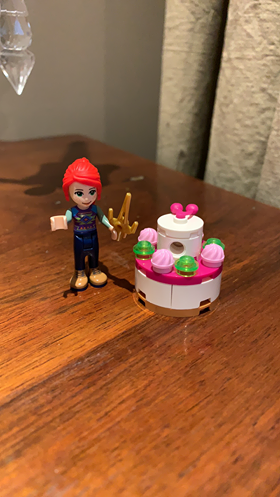
So I thought, what the heck—I’m pretty good at building stuff, and if I could make Kate a lot more cash by completing some of the models, then I’d give it a whirl. And you know what? It was almost f*cking impossible. Every bin I pulled down from the attic contained half a build, and I was running back and forth, trying to find the rest of the pieces, which had magically ended up in a number of completely different bins. Luckily, I had several bags of ‘extra’ parts—at least I hope they’re extra and not part of yet another Lego kit that I’ll never be able to finish. At one point, I spent a literal half hour looking for a long grey piece with 2 rows of 12 little knobs and I never did find it. 60 000 pieces of Lego and not a f*cking sign of it. And it’s not like the old days when I was a kid and the bricks were primary colours and 5 basic shapes—now most of the kits come with like a thousand unique accessory pieces in a variety of colours and if you don’t have them, you can’t substitute anything else to complete a set. Ultimately, I managed to finish a bunch of space alien-type Exoforce (?) kits, some cars and trucks, a few Star Wars spacecraft, and a couple of other things, and then I packed the rest of it up for another day, a day far into the future when Kate is rich and doesn’t need my Lego blood money.
And then there’s this ad for…well, is this what we’re calling them now? But I do love the use of quotation marks:

Mousetrap Update: I didn’t find it in any of the Lego bins. Also, I took apart the skirting around our kitchen island and looked under it, but the mousetrap wasn’t there either. Nor was it in the space between the stove and the counter. We have now looked in every conceivable spot that an errant mousetrap could find itself, and I’m stymied. Also peeved. Also a little freaked out, like did someone break into our house, see the mousetrap on the floor and steal it, along with my second favourite purse and a small makeup bag that were also in that kitchen and that I’m also missing?
One last update: As the Editor of DarkWinter Press, I’m thrilled to announce our release of Cecilia Kennedy’s new short story collection Twenty-Four-Hour Shift: Dark Tales from on and off the Clock! Here’s a synopsis—it’s now available on Amazon and you can purchase either the paperback or Kindle edition by clicking here!
“Punch in your time card to begin the shift. The twenty-four dark tales of short fiction in this collection explore the unsettling things that might linger on and off the clock. Here, you’ll find short stories of work-related haunts and happenings, from the truly sinister (a human-vending machine restaurant), to horror-comedy (a photo shoot with possessed bunnies). But in the hours in between, it can’t be forgotten that the roles played as parents, co-workers, and friends are no ordinary side hustle. That work never ends. And the work shift? Well, that’s the thing that makes you peek over your shoulder and ask, “What just moved?” But you have to clock in to find out.“






 mydangblog